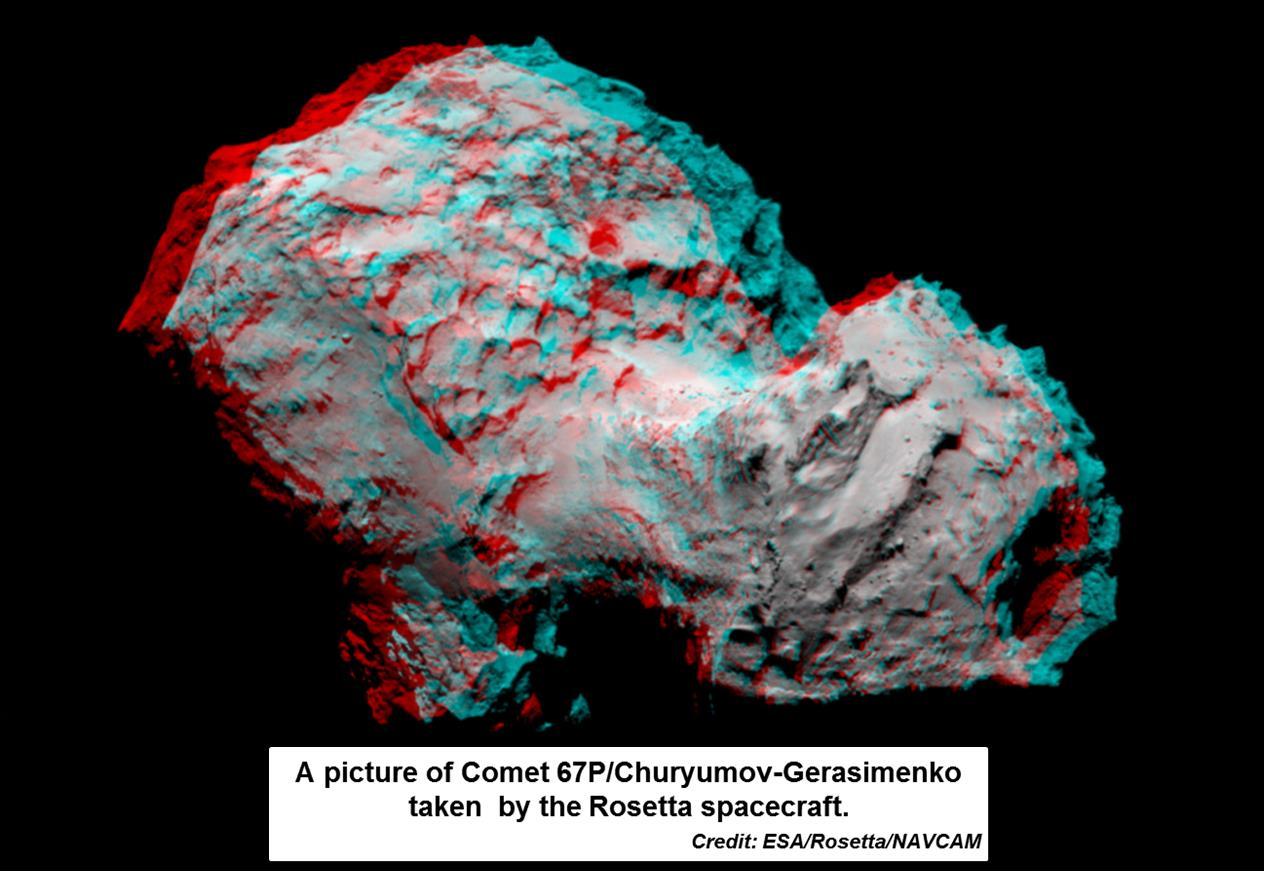
The European space probe Rosetta achieved a historic milestone by rendezvousing with Comet 67P after a decade-long journey spanning 6 billion kilometres. Now within 100 kilometres of the comet, which travels at 55,000 kilometres per hour, the mission aims to deploy a robotic lab, Philae, to land on the comet’s irregular surface—measuring approximately 3km by 5km. This will mark the first-ever landing on a comet, offering insights into planetary formation 4.6 billion years ago. The probe’s journey involved four gravitational slingshots from Mars and Earth, followed by a 31-month hibernation due to insufficient solar power, before resuming operations in January. By November, Rosetta will position Philae to conduct six months of experiments on cometary chemistry and texture, after which the probe will accompany the comet on its orbit toward Jupiter.
Recent images from Rosetta revealed the comet’s shape resembles a duck rather than the expected potato, complicating landing site selection. Despite these challenges, the mission underscores humanity’s quest