ROTARY CLUB OF WYNBERG
Vol. 64 No. 17
7th February 2013
ss PRESIDENT Mike Schreiber (021) 689 4466 SECRETARY Karen Overbosch (082) 574 5952
EDITORIAL Submitted by Don Lidgley BBC Internet News 8 February 2013 Nigeria polio vaccinators shot dead in Kano
TREASURER Mike Schreiber (021) 689 4466 EDITORIAL BOARD Barry Cleveland (021) 788 6781 Biffy Danckwerts (021) 683 5522
UNDERSTANDING MONTH
ROTARY WORLD
Gordon Knight (021) 783 1008
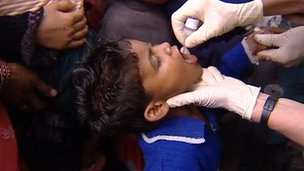
Nigeria is one of only three countries where polio is still endemic. Nine female polio vaccinators have been killed in two shootings at health centres in northern Nigeria, police have told the BBC. In the first attack in Kano the polio vaccinators were shot dead by gunmen who drove up on a motor tricycle. Thirty minutes later gunmen targeted a clinic outside Kano city as the vaccinators prepared to start work. Some Nigerian Muslim leaders have previously opposed polio vaccinations, claiming they could cause infertility. On Thursday, a controversial Islamic cleric spoke out against the polio vaccination campaign, telling people that new cases of polio were caused by contaminated medicine. Such opposition is a major reason why Nigeria is one of just three countries where polio is still endemic. But this is believed to be the first time polio vaccinators have been attacked in the country. Some Kano residents told the BBC’s Yusuf Yakasai in the city that other people injured in the first attack had been taken to hospital. A health official confirmed to the BBC that those killed in the second attack in Hotoro were female health workers - there were earlier reports that people waiting at the clinic may have been among those shot. Witnesses in Hotoro told the BBC gunmen also approached the health centre using a motor tricycle. Analysts believe the attacks may have been the work of the militant Islamist group Boko Haram but it has not yet commented and no group has said it carried out the attack. The group - whose name translates as “Western education is forbidden” - says it is fighting to overthrow the government and impose Sharia. It has been blamed for the deaths of some 1,400 people in central and northern Nigeria since 2010. According to the Global Polio Eradication Initiative, there were 121 cases of polio in Nigeria last year, compared to 58 in Pakistan and 37 in Afghanistan. In the past month, polio workers have also been targeted and killed in Pakistan, where the Taliban have threatened anti-polio efforts - accusing health workers of working as US spies and alleging that the vaccine makes children sterile.
Polio Polio is an infectious disease caused by a virus which invades the nervous system and may cause irreversible paralysis It can strike at any age but mainly affects children under five There is no cure for polio, it can only be prevented Polio vaccine, given multiple times, can protect a child for life. As long as a single child remains infected with polio, unvaccinated children in all countries are at risk
Article by Fergus Walsh, Medical Correspondent
Vaccination is key to controlling the disease. Glance at the latest figures for polio incidence and it would appear that the world is within touching distance of eradicating the disease. Last year there were just 205 cases of naturally occurring poliovirus compared with 650 cases in 2011 and a staggering 350,000 a quarter of a century ago. There are now three countries - Pakistan, Afghanistan and Nigeria - where transmission of the disease has never been halted compared to 125 countries in the late 1980s.India has been polio-free for two years - a remarkable achievement. This week the billionaire philanthropist Bill Gates will deliver the annual BBC Richard Dimbleby Lecture in which he will spell out his commitment to ridding the world of this dread infectious disease which can cause paralysis and even death within hours. Bill Gates is the single most influential voice in global health, so when he turns his attention to an issue, it is worth listening. Through the Gates Foundation, Bill and his wife Melinda have already given away nearly $30 billion of their fortune and there are tens of billions more in the pipeline. He has spoken to me previously of his passionate belief in the power of vaccines and his determination to defeat polio. In his lecture Mr Gates will liken the pace of innovation in computers with the fight against polio: .He will say: “In the late 1970s we had a dream of giving everybody access to computer technology - a vision of a computer on every desktop. Now there is a computer in every pocket. “It was first recognised at least 4,000 years ago, but it was just 200 years ago we figured out it’s contagious - just 100 years ago we learned it’s a virus. Just 50 years ago we developed the vaccine to prevent it. But Mr Gates will also acknowledge that the final push against polio is proving extremely difficult: “I can say without reservation that the last mile is not only the hardest mile; it’s also much harder than I expected,” he said. The killing of nine health workers in Pakistan last month was a shocking reminder of the challenges facing those trying to chase down the virus and protect every last child. I have written before of the hurdles facing immunisation teams. Part of polio’s danger is its utter portability - it can be spread across borders by one infected traveller, who can continue to shed virus for weeks on end. Only last week an emergency vaccination programme was ordered in Cairo after samples of the polio virus were found in sewage - the strain matches that in southern Pakistan. The oral polio vaccine can - in very rare cases - trigger polio. The WHO says this happens in one in 2.5 million first doses of vaccine. Over the past decade 15 billion doses of polio vaccine drops have been given and there have been 200 confirmed cases of circulating vaccine-derived polio virus. But with naturally occurring polio cases now so low there is a minority which claims the oral live vaccine is causing significant harm. Dr Jacob Puliyel, a paediatrician in Delhi, wrote in the Indian Journal of Medical Ethics last year that “the polio eradication programme epitomises nearly everything that is wrong with donor-funded ‘disease specific’ vertical projects, at the cost of investments in community-oriented primary care”. Dr Puliyel said the money spent on fighting polio in India would have been put to better use on water, sanitation and routine immunisation. Dr Puliyel blames the polio vaccine for a sharp rise in India of cases of Acute Flaccid Paralysis - weakness or inability to move limbs. But polio is just one of many causes, with other viruses and bacteria also responsible. Public health officials also point out that monitoring of cases is now far better than in previous decades. In pure economic terms it is hard to justify the $1bn (£630m) spent annually on driving down polio cases by a few hundred each year. It makes sense only if global eradication is achieved. Then the repeated - sometimes monthly - polio immunisation rounds in at-risk communities can stop and the vaccine be part of the standard childhood schedule. This is a now or never moment - kick polio off the planet over the next few years or face a humiliating retreat which could see the virus re-emerge in scores of countries. Bill Gates recognises what is at stake for global health: “Polio eradication is a proving ground, a test. It will reveal what human beings are capable of, and suggest how ambitious we can be about our future.”
SLOTS
Biffy: Compulsory: with more socials than meetings lately I think even the editors have forgotten who is on duty. A big thank you to Sharon and Dave for an excellent evening last week. And Karen for showing us up with her quiz questions. Typical, we bring visitors and they win everything in sight. Well done Pete and Sarah. To all the Valentines, see you on Thursday. Thank you too to club members for all the editorial contributions. This prompted this shorter additional edition as well. Message from Don: Don has been battling a severe attack of bronchitis. Thankfully Edith is caring for him. Last Tuesday his Seahouses friend Roy Dodds phoned before attending his meeting, and sent the club’s greetings. Don passes on his greetings to the club. Get well Don. JACKPOT We even had a jackpot at the braai. Karen did not manage to find the K♥ which means the jackpot goes up and a bigger chance of drawing the elusive K♥ next time with less cards in the pack. R20 attendance prize was won by Phillip. PRESIDENT’S QUOTES The President lost his voice last week so no quotes. But he will be back by popular demand. PROGRAMME February 2013
Committee: Barnard, Bird, Hovstad, Michalowsky, Wetmore
Thursday 14
Social meeting : Valentine’s Day Visit by Odd Henning Johannessen, wife Reidun & daughter Oda
Thursday 21
Normal meeting : Speaker: Director Glen van Harte, Metro South Education District Visit by Oddemarka Junior School
Thursday 28
Board meeting
March 2013
Committee: van Wyk, Gowdy, Overbosch, Todd, Murphy, Klotz-Gleave
Thursday 7
AG’s visit
Thursday 14
Normal meeting : speaker to be arranged Visit by Haugaland College, Norway. Speaker being arranged.
Wednesday 20
Joint meeting at the Rotaract club. No meeting on Thurs 21 as it is a public holiday : Human Rights Day
Thursday 28
Normal meeting due to public holiday the previous week : speaker to be arranged
DUTY ROSTER
14 February Sergeant
Smith
Attendance Officer
Danckwerts
Wynpress Editorial
Williams
21 February
7 March
Cleveland
Gowdy
Danckwerts
Danckwerts
Lidgley
Barnard
14 March Overbosch Danckwerts Bird
Minutes for Wynpress Compilation of Wynpress
Knight
Danckwerts
Cleveland
Knight
Danckwerts
Knight
Danckwerts
Cleveland
Door Duty
Bredenkamp
Wetmore
Williams
Grace
van Wyk
Vivian
Wetmore
Loyal Toast
Vivian
Wetmore
Murphy
International Toast
Williams
Van Eeden
Barnard
Speaker Introduction
N/A
Osmond
N/A
Speaker Thanks
Smith
Todd
N/A
Murphy Klotz-Gleave Williams Bird TBA van Wyk
IF YOU CANNOT MAKE YOUR ROSTERED DATE, PLEASE SWAP WITH ANOTHER ROTARIAN AND INFORM THE DUTY SERGEANT
TAILPIECE Finished and Complete No English dictionary has been able to adequately explain the difference between the two words, COMPLETE and FINISHED. In a recently held linguistic competition held in London, attended by the best in the world, Samsundar Balgobin, a Guyanese man from Bachelors Adventure was the clear winner with a standing ovation lasting over 5 minutes. His final question was this: “Some people say there is no difference between COMPLETE and FINISHED. How do you explain the difference between COMPLETE and FINISHED in a way that is easy to understand?” His answer made him receive an invitation to dine with the Queen who decided to call him after the contest. He won a trip to travel the world in style and a case of 25 year old Eldorado rum for his answer. Here is his astute answer: “When you marry the right woman, you are COMPLETE. And when you marry the wrong woman, you are FINISHED. And when the right one catches you with the wrong one, you are COMPLETELY FINISHED!”